Couplings, Use and Types
Shaft couplings are one of the most
common mechanical elements as they are so important in power transmission
systems. Therefore, they are used in a variety of applications and service
environments. So, the designers and engineers have over the years developed
different coupling variations for specific operating conditions and
environments.
Why Use
Couplings and its types
There exist different types of misalignment
and failures in mechanical devices. There are generally three types of
misalignment such as:
·
Combination misalignment
·
Parallel offset misalignment
·
Angle misalignment
Gear couplings are a type of mechanical device that is designed to bring a mechanical connection between the two rotating shafts of a mechanical device and use a gear mesh to transfer power and torque between the connected shafts while correcting the inherent misalignment. Therefore, you should look for the best Coupling dealers in Chennai!
Commercial couplings are bigger so
that they can pass more torque than other types of couplings. Due to their load
transfer capability, they are often used not only in high-speed applications
but also in applications that require low inertia and high torque capacity of
the drive system. Divyajyoti Enterprises is one of the top-notch Coupling
dealers in Chennai.

As there are many designs, these two types of mechanical couplings differ significantly in structure and function. Some couplings can be connected to the shaft without moving the shaft, but most couplings require the shaft to be moved for installation.
Unlike gears, in most cases, the
coupling does not change the direction of movement or the angular velocity. In
contrast to coupling, it cannot be connected or disconnected during operation.
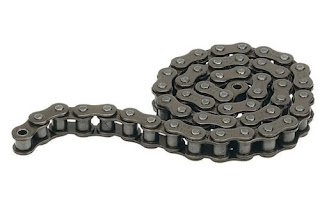
Couplings can only transmit torque over short distances. Chain drives and belt
drives are better alternatives for long distances. Couplings are often paired
with lead thread assemblies to connect the propeller shaft in-line with the
motor. The couplings are used for the following reasons:
·
Power transmission
·
Shock & vibration absorption
·
Accommodating the misalignment
·
Heat flow stoppage
·
Overload protection


Comments
Post a Comment